I beg you to let everything go, as I have let everything go. Whoever you are, you who hold me now, leave me and go your way.
Walt Whitman
Love does not tame.
On the walls of Naples
In the great North, in the middle of a white and boundless silence, a she-wolf with patches of cinnamon-red fur on her head and a long white stripe on her chest, has found the best den to give birth to her cubs. Among them, a little bundle of fur that will soon become the most famous wolf of all time: White Fang.
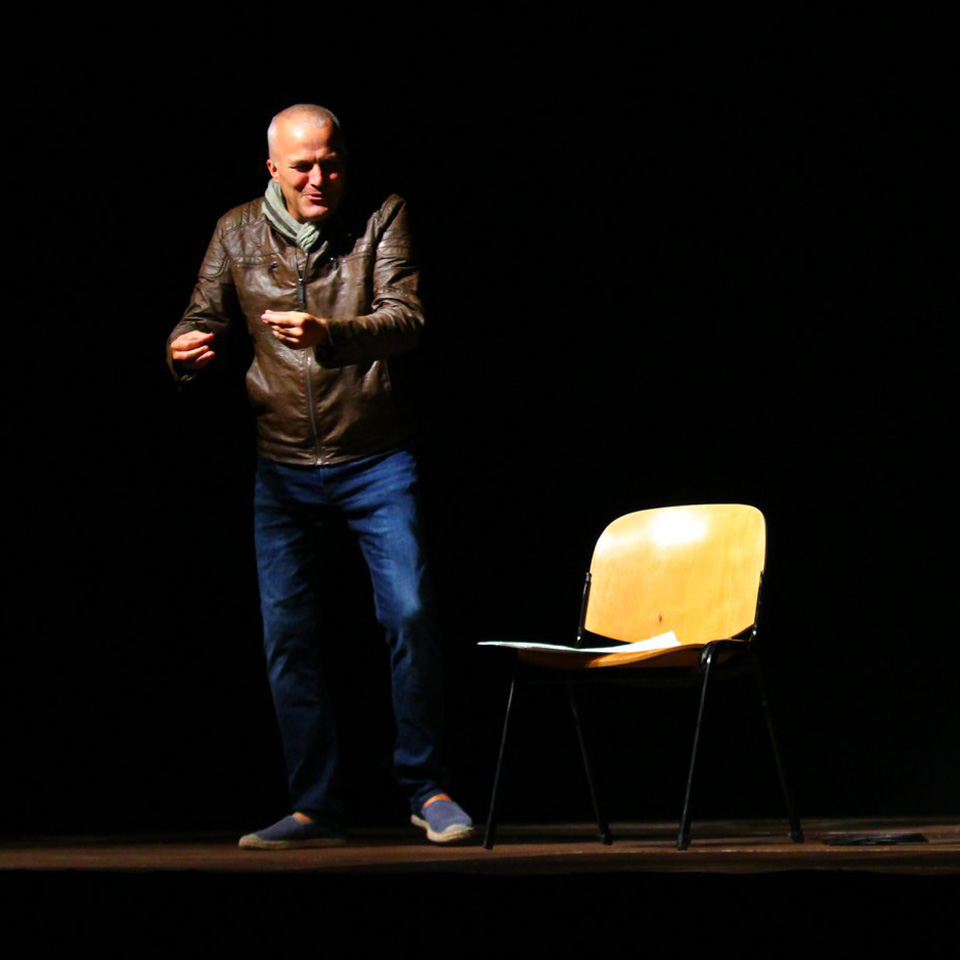
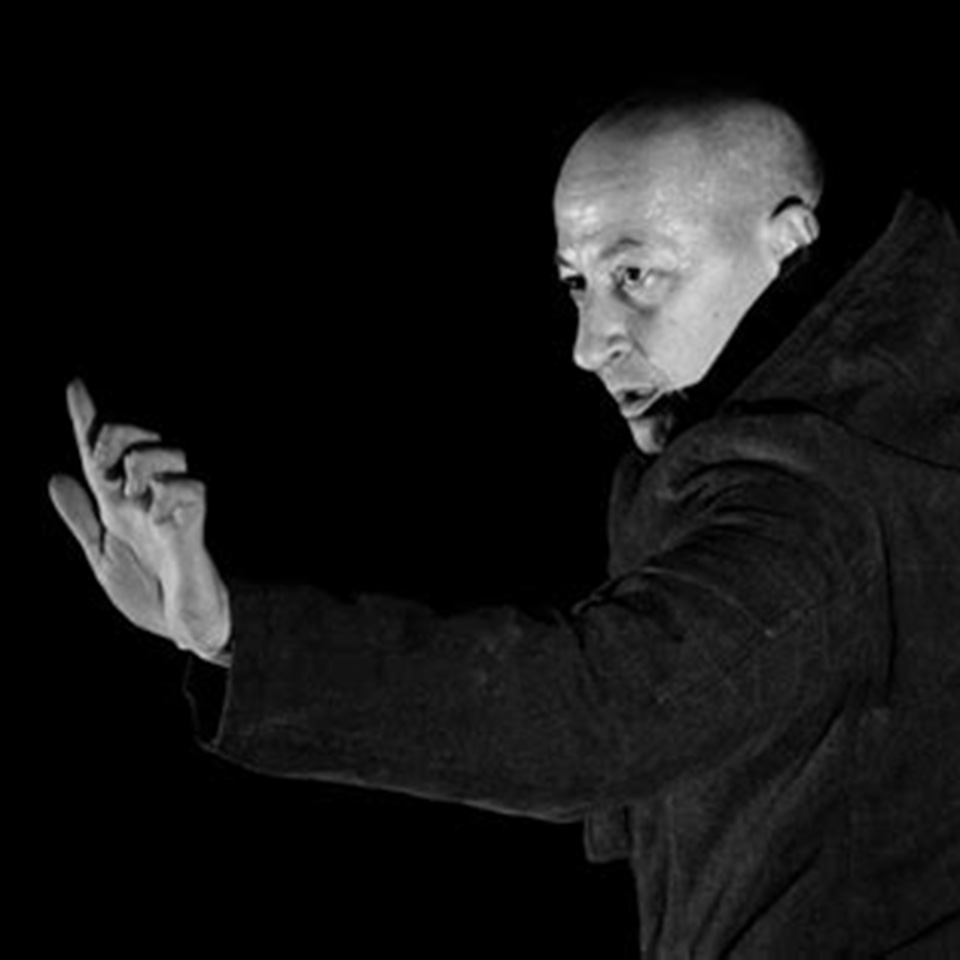
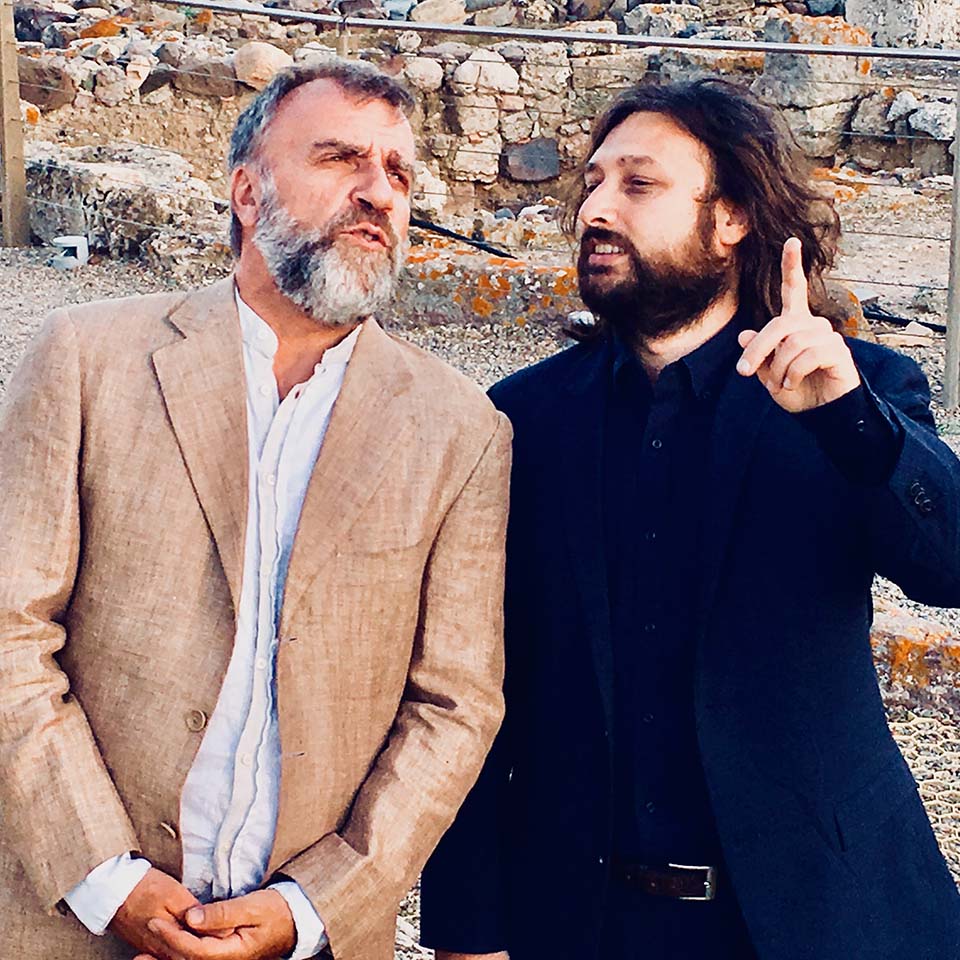
Luigi D’Elia and Francesco Niccolini return to the place they love most, the great forest. But if five years ago they had told it through the eyes of an amazed child and an expert and silent grandfather, this time they give up on human beings and their words, to meet those who are part of the forest like its shadows, the moss, the oxygen: the wolves.
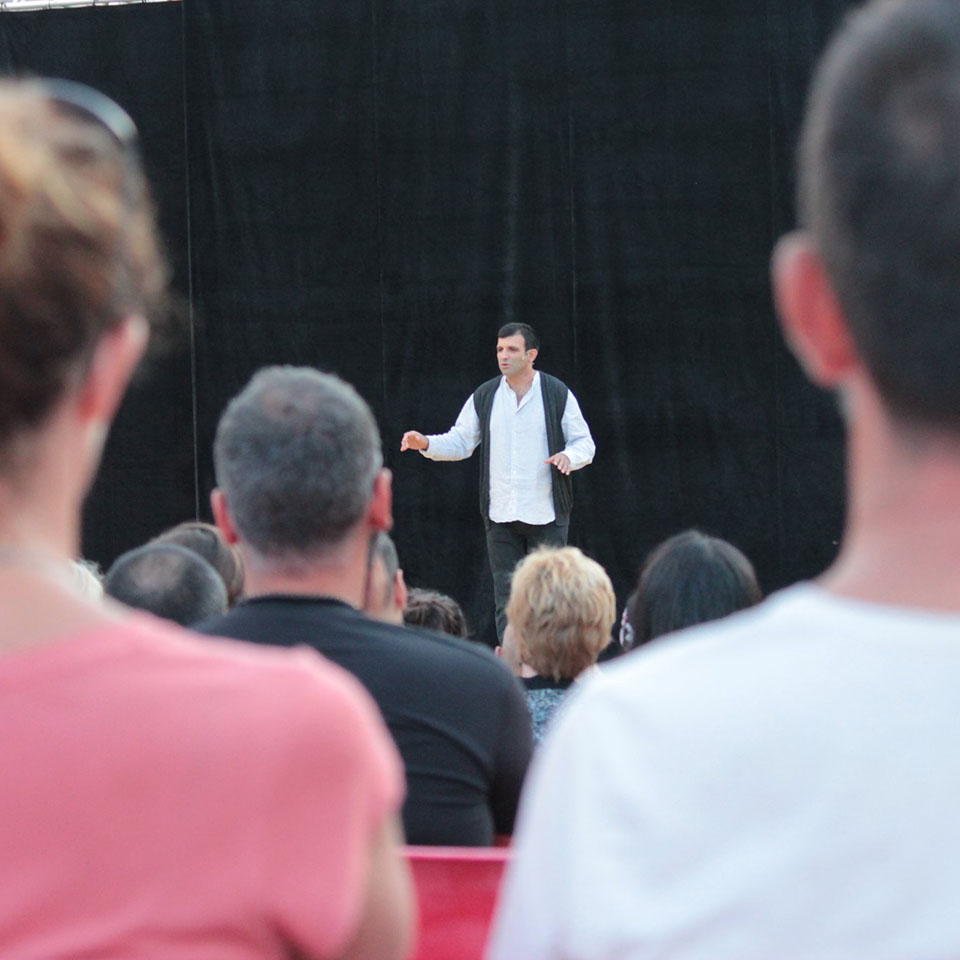
This is a show that has the eyes of a wolf, from when he is a cub for the first time discovers the world outside the den to when he experiences life, death, the night, man, until the strangest and most mysterious encounter: an unknown howl, in the night. And from there there is no turning back. A story that bites, sometimes runs fast on the snow, other times gathers around the fire. A wild and passionate tribute that comes after ten years of telling nature, to Jack London, to wolves, to the Great North and to the ancient and ancestral childhood of the world.
How much like us, wolves. They change their hunting techniques depending on the difficulties they encounter, they share food with older members, who are unable to obtain it, and they give each other gifts. They can live a week without eating and can travel up to thirty kilometers without breaking stride. They have three communication systems: vocal, postural and olfactory. The color of their fur varies from slate to white, from chocolate brown to ochre, cinnamon and gray. It is not true that wolves limit themselves to killing old, weak or wounded prey, sometimes they also pounce on healthy specimens, just as they do not always hunt out of necessity: sometimes – rarely, to tell the truth – they kill in excess. Sometimes they even kill each other. But they dedicate a good part of their time to their young, and to playing.
Wolves are united by a subtle bond with the forest they pass through: their furs collect and carry seeds fallen from trees, effectively dispersing them along the trail, for miles around. Translated: wolves plant trees. The most famous of all wolves, without a doubt, is White Fang, better known in Italy as Zanna Bianca.
But perhaps not everyone remembers that White Fang is a crossbreed: a bit wolf and a bit dog. More wolf than dog. And crossbreeds, those we scornfully call “mongrels,” are the best animals, because they often take the merits of one breed and the other.
So, when Luigi D’Elia and I began to build the show, we were forced to betray Jack London and his famous novel to give life to our own crossover: a bit of White Fang
The call of the forest, of the far north of the world, was too strong for the wolf protagonist of this story to grow old like a pet dog, at home, on a carpet, between slippers and lace curtains: impossible, White Fang is not just any, horrible city dog or lap dog. Unfaithful to Jack London, we preferred to remain faithful to his two novels mixed together, and to his misadventures in search of gold and fame: with a double somersault, “our” White Fang gave in to that unstoppable call of the forest that – God willing, as a dear old lady we know used to say – we hope every boy and every spectator will experience one day, at least once. No slippers, no living rooms, no cities, no cell phones, no pre-packaged snacks: just the woods, a heart beating a thousand times a minute, and life. Francesco Niccolini