“Studio per un nuovo Album – Numero Primo”
In the space station in the film 2001: A Space Odyssey there are telephone booths available to travelers, they are very modern, comfortable and allow video calls, but they are fixed. None of the protagonists of the film use a mobile phone or a PDA.
In 20,000 Leagues Under the Sea, Jules Verne imagines the use of energy, materials and technologies that are very similar to those that were actually used for modern submarines. But the most astonishing and accurate predictions about the future seem to be those contained in the Thousand and One Nights: the invention of the password “open sesame” and the touch-screen of Aladdin’s lamp. We can therefore confidently await the advent of the flying carpet in a reasonable time. I think I can conclude that it is much more difficult to make predictions about the short-term future than the long-term. Yet the near future should be part of a horizon to look at carefully. A dilated present like the one we live in risks both erasing the memory of the past and inhibiting any reasoning about the future, taking for granted that it is an update of the present, an update “compatible” with the present. Telling stories set in the near future is an exercise confined to one genre: science fiction.
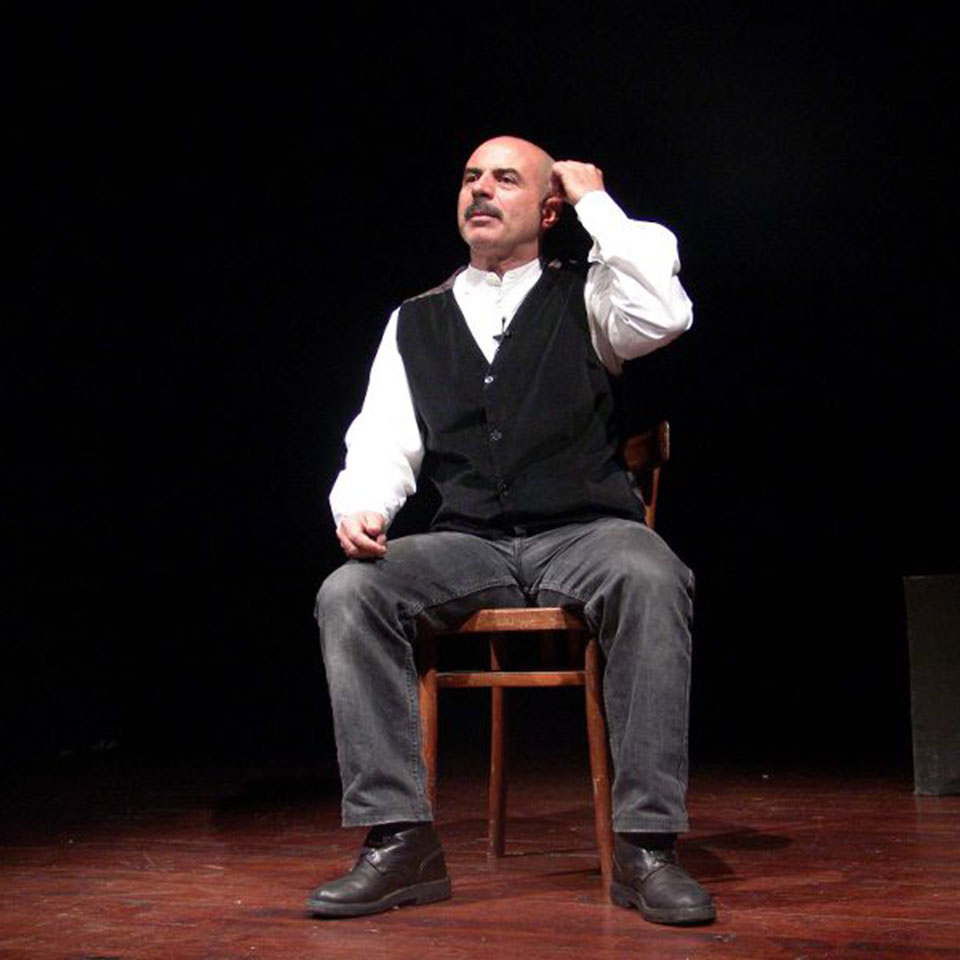
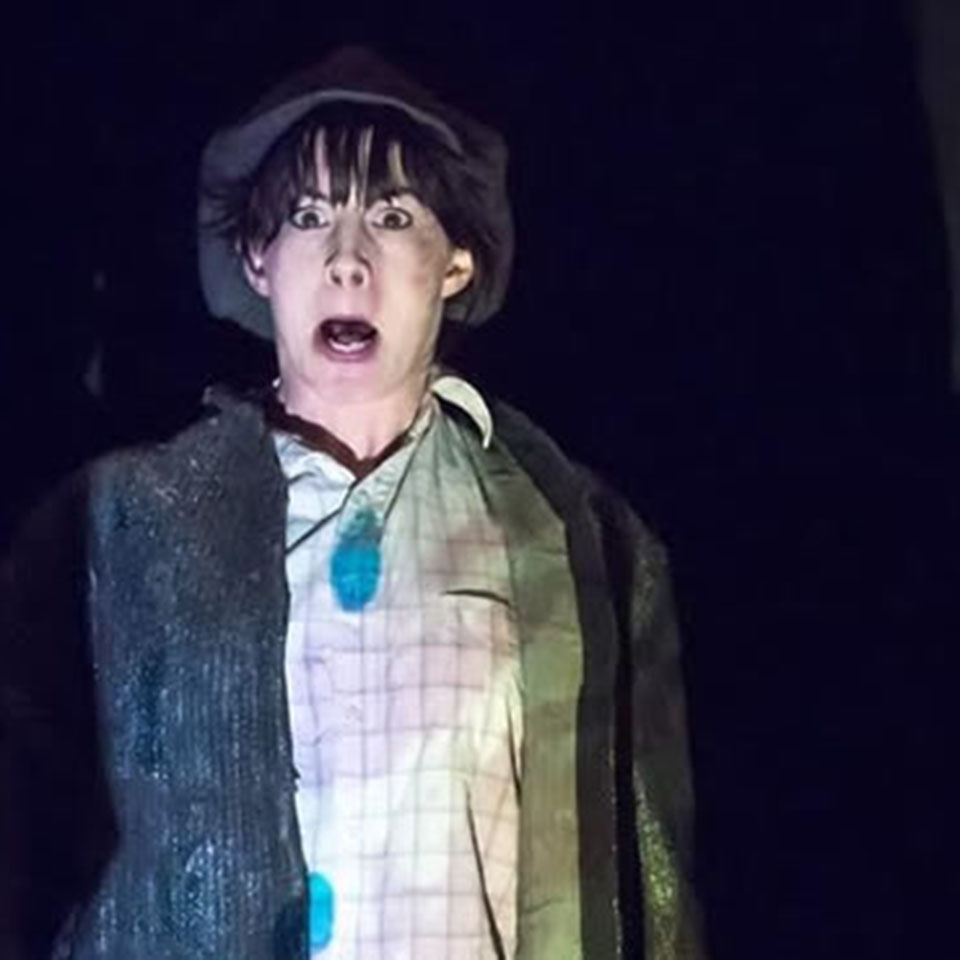
There is a tradition of science fiction in literature and cinema but it is not very widespread in the theater. To cut to the chase, it is best to immediately say that Numero Primo is an experiment in science fiction narrated in the theater, but the authors do not like to call it that. Numero Primo is a story that tells of a probable future made of things, beasts and humans shuffled together like cards before playing. Numero Primo is also the nickname of the protagonist, son of Ettore and an uncertain mother. But even things and beasts have voices and thoughts in this story. Marco Paolini and Gianfranco Bettin, co-authors of this work, started from some questions: What is the relationship of each of us with the evolution of technologies? How much time do they occupy in our lives? How interested are we in knowing about them? What questions do we ask ourselves and which ones do we not about the pace of adaptation that they impose on us to keep up with them? How thin is the line between biological intelligence and artificial intelligence? If there is a direction, is there also a destination for all this movement? The term Anthropocene has been adopted by the scientific community to identify a very young geological era characterized by the prevalent action of the human factor as a cause of transformation of the planet. Apparently the Anthropocene is governed by a principle that is difficult for the scientific world to understand: fashion. Everything that is not in fashion struggles to survive, or becomes extinct: this applies to things, animals, institutions, good ideas and the best intentions. The Anthropocene is the most fickle geological era ever seen on the planet. New technologies are in fashion by definition, but they often age quickly, however, generating new expectations. What if it were not only things and the scenarios around us that were changing rapidly, but ourselves, partly by choice and partly by necessity? And in that case towards which direction or destination? Perhaps we should ask fashion.
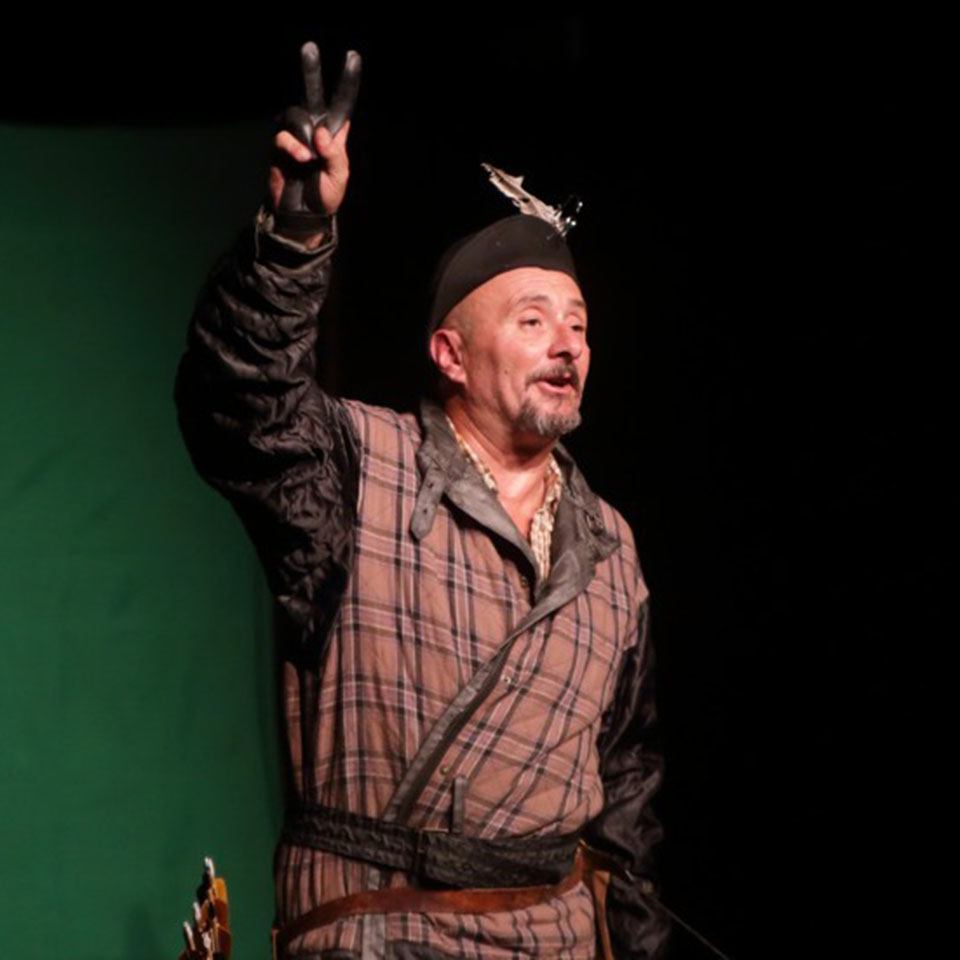
The narrator on stage has the task of making credible things that are possible tomorrow, but that today seem unlikely. The imagined time horizon concerns the next 5000 days and just thinking about how much the world of things has changed in the 5000 days just passed it is at least necessary to look to the future with the benefit of the doubt with respect to what today is still unlikely. “I am at an age where I don’t feel the need to look back, to rebuild, I prefer to force myself to imagine the future, so I will make an Album with new characters. I will talk about my generation grappling with a pervasive technological revolution. I will talk about the attraction and distrust towards it, about the resurfacing of manual labor as a resistance to digital. I will talk about biology and other languages, but I will do it by following the thread of a longer story that perhaps I will tell in installments as I did with the first Albums.”
following
INTORNO A NUMERO PRIMO - Istruzioni per l’uso
The world of Prime Number is not today, but a very near tomorrow, a fable that opens scenarios on the anthropological changes that mark the beginning of a technological revolution that will change, and in part is already changing, our lives. It is a fictional story, but it is not pure invention, studies on artificial intelligence and those on neuroscience provide the ideas for the story. Starting from some references to scientific research in the second part of the evening Paolini will open another narration, which by broadening the horizon will help us understand a little more about the world of Prime Number, his personal research and study that accompanied him in the creation of this fantastic story. A narration-conversation, or conversation, that will also feed on the curiosity of the public who will want to know more. “The boundary between natural and artificial, the contrasts between real and virtual, developments in neuroscience, mechanisms of interaction between the human brain and digital devices… I don’t want to talk about things I barely know, about which I’ve read a few books or articles, I want to think about how the combination of these and other issues related to technological innovation are weighing on my life, are changing my point of view, are deciding my tomorrow. I want to do it because I don’t believe in destiny and I believe that the future is a common good to be taken care of from now, even if in every now there are always more urgent things to think about. Theatre is an excuse to try to do it in a plural way.”